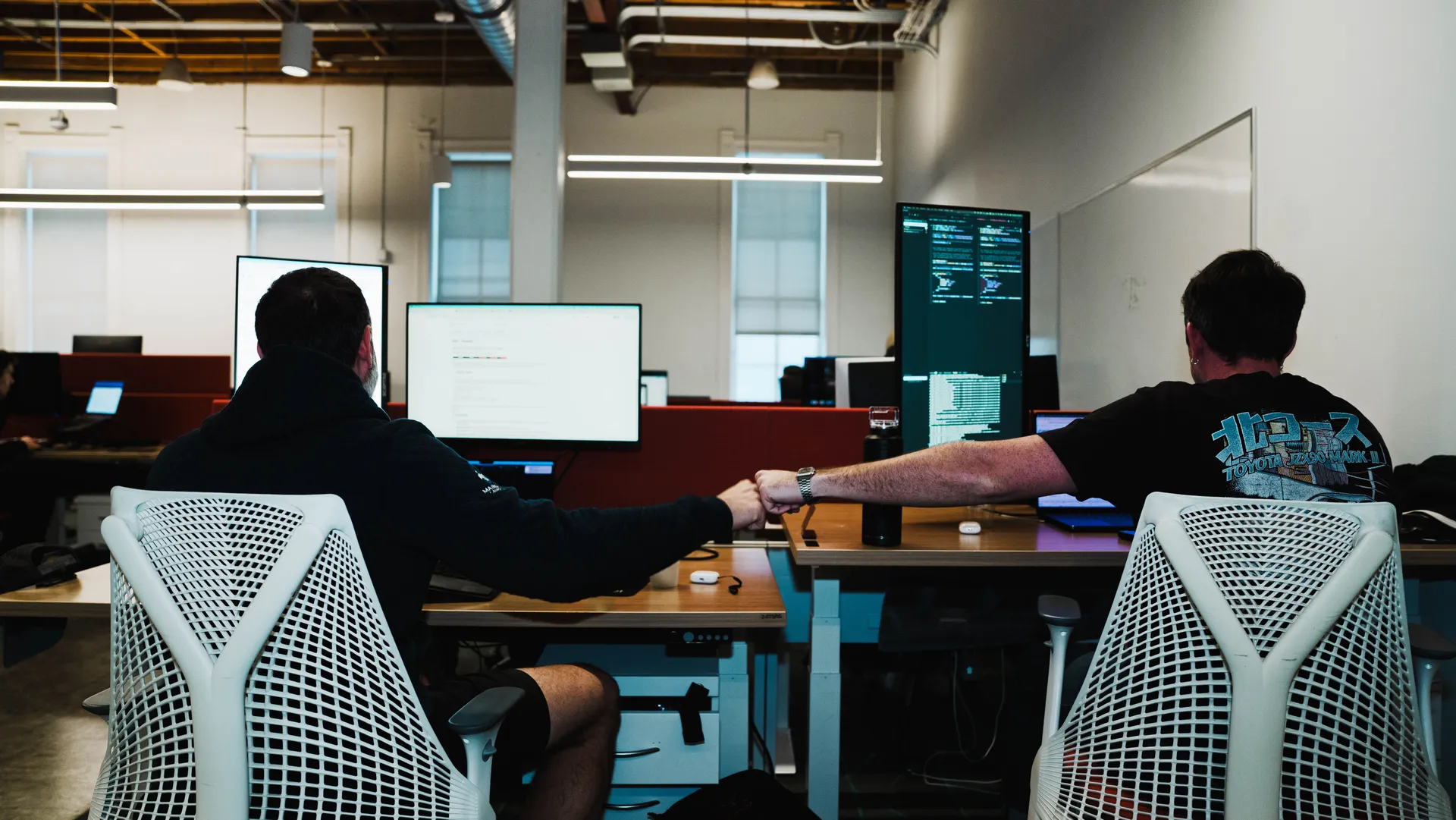
Gauntlet fellows working on laptops in the Austin space

Ten weeks. No shortcuts.

Stop Waiting.
Start Shipping.

Ten weeks of sustained execution that resets how you build. You emerge able to design and ship production-grade AI systems that advance your career.

The Problem

Your job won't make you AI-first. Nothing will — unless you force it.

You're already reading the papers, experimenting between meetings, pushing yourself to stay ahead. That energy is real — but scattered effort won't close the gap. You need a forcing function to go from curious to dangerous.

Gauntlet exists because the gap between "experimenting with AI" and building with it as a core primitive doesn't close gradually. It closes in a compressed burst of focused execution.

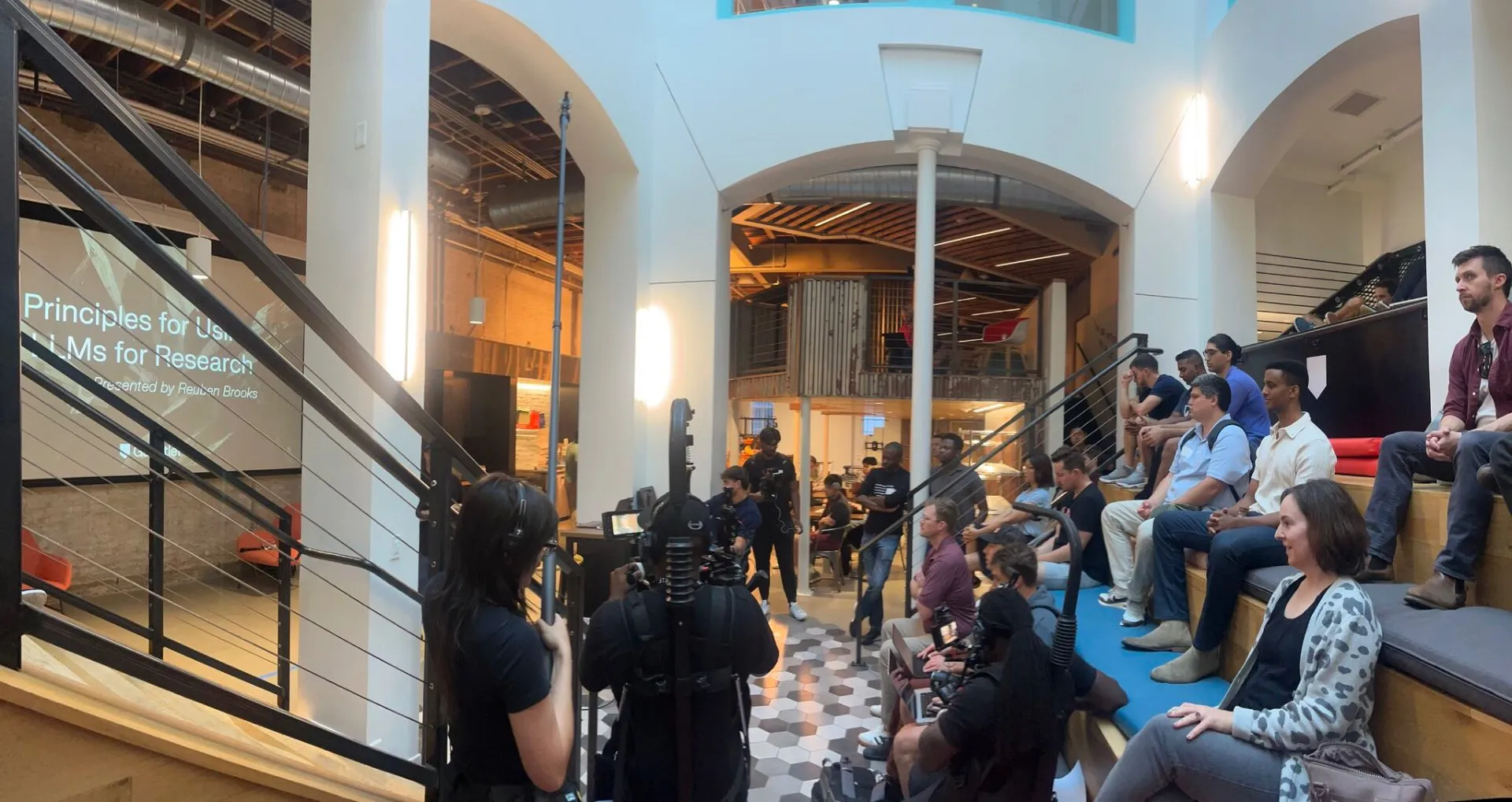
Challengers attending a lecture on LLMs for research in Austin

Austin, TX — Live instruction

The Format

Ten weeks. Full time. No half measures.

Gauntlet is a controlled environment for sustained execution — where every week produces visible proof of what you can build.

No Cost

Travel, housing, food, compute, model access are paid for by hiring partners looking to recruit Gauntlet talent.

3 weeks remote

Full-time from day one. Establish pace, tool fluency, and architectural discipline before the real pressure starts.

7 weeks in Austin

Relocate. Build in-person. The proximity, intensity, and accountability change how you operate.

High paying AI-engineering jobs

Companies watch you build in real time. Not your résumé — your output, your reasoning, your response to pressure.

Frontier model access

Challengers use the latest models to extend their skills and push what is possible.

Weekly builds

Ship every week. Real constraints. Real deadlines. No hypotheticals.

Proof, Not Promises

You don't just feel different. The numbers prove it.

Companies don't guess about Gauntlet graduates. They've already watched you ship — under pressure, with rising standards, for ten straight weeks.

0

First-round interviews secured

$200k - $950k

Starting compensation at or above

0

Weeks of sustained execution

Graduates joined companies including

Carvana
Zapier
Mainsail Partners
Peak6
"

I came in thinking I was strong. By week four, I realized I'd been building with one hand tied behind my back. By week ten, I couldn't imagine going back.

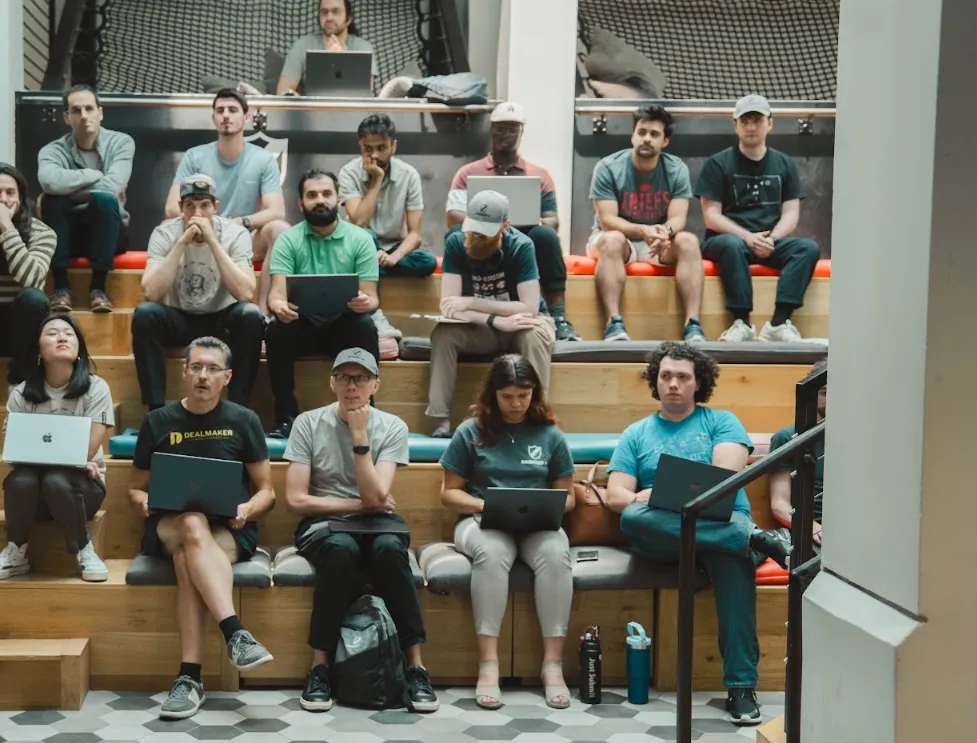
Gauntlet fellows in collaborative discussion

Cohort collaboration

Every Single Week

Drop. Build. Ship. Repeat.

Monday: assignment drops. Friday: you ship. No extensions. No excuses. The standard rises every week. So do you.

By week three, you're building things that would have taken you months. By week ten, you've forgotten what "slow" felt like.

Weeks 1–10 · Escalating complexity

The Curriculum

Each week hits harder. You hit back.

Two phases. Escalating complexity. By the end, you're building systems that would have been unimaginable at the start.

Phase 1 Remote · Weeks 1–3

An immersive launch into AI-first engineering where challengers learn to build, iterate, and ship at speed through intelligent workflows and guided collaboration.

An introduction to AI-first engineering where challengers establish core workflows, coding alongside intelligent agents and accelerating creation through AI collaboration.

  • AI-first development workflows
  • Coding agents
  • Model Context Protocol (MCP)
  • Real-time collaboration
  • Canvas-based systems

Claude Code, Cursor, Codex, MCP integrations

Spec-driven development, understanding how MCPs accelerate development, building complex collaborative systems

Focus shifts to applying AI-first workflows to unfamiliar and enterprise-scale codebases, connecting live information with reasoning systems to modernize and extend existing software.

  • Retrieval-Augmented Generation (RAG)
  • Vector databases
  • Retrieval pipelines
  • Embeddings
  • Working with legacy and enterprise systems

Vector databases (Pinecone, Weaviate, Qdrant), RAG frameworks

Selecting the right RAG architecture, adapting AI-first workflows to legacy constraints, production-oriented context design

Challengers design and ship production-ready AI agents for real-world domains, emphasizing reliability, evaluation, and system-level thinking.

  • Agent frameworks
  • Evals and verification
  • Observability
  • Agent-to-agent protocols

Agent frameworks, evaluation and observability tooling

Systematic agent development, testing and iteration, evaluation-driven improvement

Phase 2 On Site · Weeks 4–10

The in-person phase develops challengers into system-level AI engineers focused on delivery, reliability, and operating in real enterprise environments.

Challengers execute multiple real client projects, translating ambiguous requirements into production-ready systems under professional constraints.

  • Real-world problem translation
  • Professional delivery standards
  • Deployment

Project-dependent tooling and AI-first workflows

Client collaboration, scoping, efficient execution

Focus shifts to speed, quality, and consistency as challengers deliver additional client projects using refined AI-first methodologies.

  • Rapid delivery
  • Tool selection
  • AI-assisted quality assurance

Full AI development stack and project-specific technologies

Optimizing AI-first workflows for professional delivery

Challengers work with large-scale systems, adapting and deploying fine-tuned models within enterprise constraints.

  • Enterprise architecture
  • Supervised fine-tuning
  • PEFT, LoRA, QLoRA

Fine-tuning frameworks, enterprise debugging and deployment tools

Integrating AI into production-scale enterprise systems

Modern AI meets legacy software as challengers coordinate agent teams to refactor, extend, and modernize complex codebases.

  • Multi-agent systems
  • Agent coordination
  • Modernization pipelines
  • MCP

Agent orchestration frameworks, evaluation and debugging tools

Using agent teams to manage and reduce system complexity

Challengers rapidly learn new domains using AI, combining text, image, audio, and interactive systems into complete experiences.

  • Multimodal AI
  • Image and video generation
  • Voice and audio synthesis

Eleven Labs, Replicate, Midjourney, Stable Diffusion

AI-accelerated learning and cross-modal system integration

Focus shifts to designing scalable AI systems while beginning capstone development.

  • Scaling agents
  • Scaling MCPs
  • Agent protocols
  • Monitoring and infrastructure

Cloud platforms, protocol implementations, observability systems

Production AI system architecture and platform design

Challengers complete and deploy a comprehensive AI system capable of learning, adaptation, and real-world optimization.

  • Reinforcement learning environments
  • Advanced agent capabilities
  • Performance optimization

RL frameworks, full AI deployment pipelines

End-to-end frontier AI system delivery and presentation

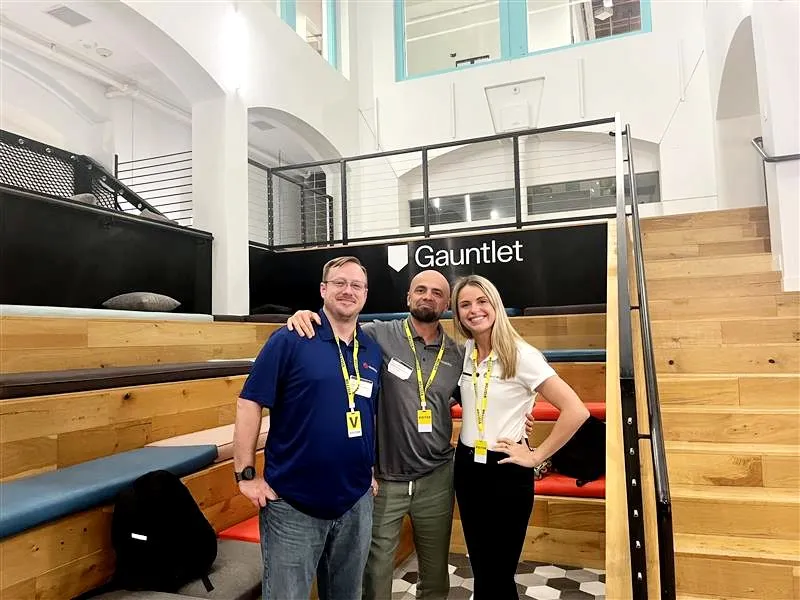
Three Gauntlet fellows by the Gauntlet sign

Fellowship bonds

Is This You?

This isn't for everyone. Good.

You need to be more than curious. You need to be committed.

You've shipped production systems — not just side projects

You're obsessed with getting better, not just getting by

You want feedback that's honest, not comfortable

You'll go all-in for ten weeks — no hedging

You'd rather be judged on what you build than where you went to school

Choose Your Path

Two ways in. Both demand everything.

Where you start depends on your experience. Where you end up depends entirely on you.

Gauntlet Prime

For engineers who want to work for companies

  • 3+ years of professional software engineering experience (internships do not count)
  • Backend or full-stack production experience
  • Passing CCAT score for their experience level
  • U.S. work authorization (no H1B sponsorship)
  • Can commit full-time for 10 weeks, relocate to Austin for 7

Gauntlet for America

For engineers who want to work for the US Government

  • 1+ year of professional software engineering experience
  • Backend or full-stack production experience
  • 35+ on the CCAT
  • U.S. Citizenship
  • Can commit full-time for 10 weeks, relocate to Austin for 7
  • Willing to relocate to Washington DC

Upcoming Cohorts

Seats fill. Deadlines pass. Move.

Applications are reviewed on a rolling basis. Earlier is better. Waiting costs you.

Cohort 5

Starts April 27, 2026

Accepting applications · 0d until start

Cohort 6

Starts July 6, 2026

Accepting applications · 0d until start

Cohort 7

Starts September 14, 2026

Accepting applications · 0d until start

The window is open

You already know.

Ten weeks from now, you're either the same engineer — or a fundamentally different one.

You've read this far. You're not browsing. You're deciding. Cohorts fill fast. Don't wait.