
The Mom Who Works With AI
Inside an AI-powered household, and a playbook for how moms are using artificial intelligence at work and at home.
The Work That Never Clocks Out
If you are a mom, you are running a small empire. Schedules, meals, homework, doctor appointments, school forms, groceries, emotional check-ins, bedtime routines, and somewhere in there, maybe a career too. The list keeps going. The thinking behind it never stops.
Researchers call this the "mental load," the invisible labor of planning, anticipating, and deciding that falls disproportionately on mothers. It is the thing that exhausts you before a single task gets done.
“It's not the tasks that drain you. It's the thinking, planning, anticipating, and deciding that never stop.
But something is shifting. A growing number of mothers are finding that AI, the same technology behind ChatGPT, voice assistants, and smart search, can function as a co-pilot for daily life. It does not replace your judgment, your instincts, or your love. It is a thinking partner that helps you plan faster, decide quicker, and reclaim mental space for what actually matters.
85%
of mothers use AI tools daily
70%
report improved work productivity
55%
report reduced stress levels
To understand what this looks like when fully integrated into a life, meet Nani Skinner.
Nine Years Homeschooling, Then Gauntlet
Nani Skinner is a software engineer building an AI-powered platform for teachers, and a mom of two. Before she ever wrote a line of code, she spent nearly nine years homeschooling her children, studying child development and Montessori education. That period shaped how she thinks about learning and curiosity, and those skills turned out to be surprisingly relevant when she eventually taught herself to code and moved into the tech industry.
Her path into AI came through Gauntlet, a ten-week, roughly one-thousand-hour engineering program dedicated to one thing: learning how to communicate with AI and becoming an AI-first engineer. Participants build real AI systems from day one, shipping working products under intense time pressure while developing fluency in how to think, design, and build alongside AI tools. Her husband Patrick went through first. Nani was skeptical at first, but the pace and quality of what participants were building convinced her to apply. The program was demanding, and she struggled with self-doubt early on.
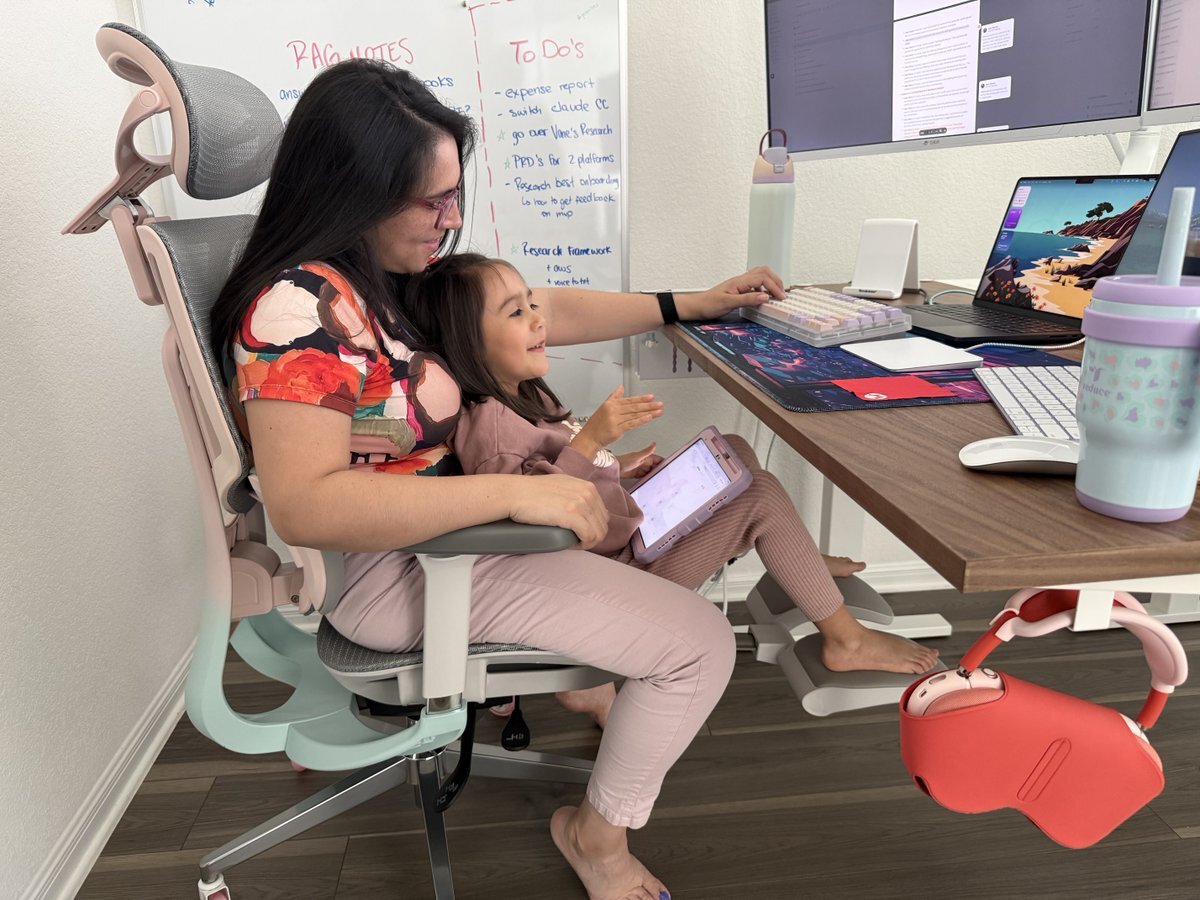
She made it work the way moms do. She set up a workspace at home where her kids could come after school, sometimes bringing in a blow-up mattress so they could be nearby while she kept building late into the night. Working under pressure alongside experienced engineers helped break through her imposter syndrome, and the program changed how she thought about AI entirely.
“AI is not something I prompt and wait for. It is a collaborator. We work through problems together.
After Gauntlet, Nani joined a small team building AI tools for public school teachers. She leads the research phase of product development and uses AI daily as a research analyst, writing partner, and engineering companion. What used to take weeks now takes days, and she routinely delivers the output of a much larger team on her own.
But here is the part that matters for every mom reading this. Nani's AI skills did not stay at the office. They came home with her.
AI Lives in This House
In the Skinner household, AI is more like a family habit than a gadget in a drawer. Both Nani and Patrick went through Gauntlet, so both parents think of AI as a tool for getting things done, at work and at home. They use it to plan, research, brainstorm, and solve problems around the house. Their kids have picked up on it naturally.
The Skinner children do not just watch their parents use AI. They participate. They don't immediately turn to it for their first questions about dinosaurs or space; instead, they reach for it when a topic truly takes hold. They use it to go deeper into school projects, and they are learning to code alongside it.
When a dinner conversation gets deep, moving past simple answers into wondering what happens next, AI becomes a way to elaborate and think through those complex ideas together, as a family.

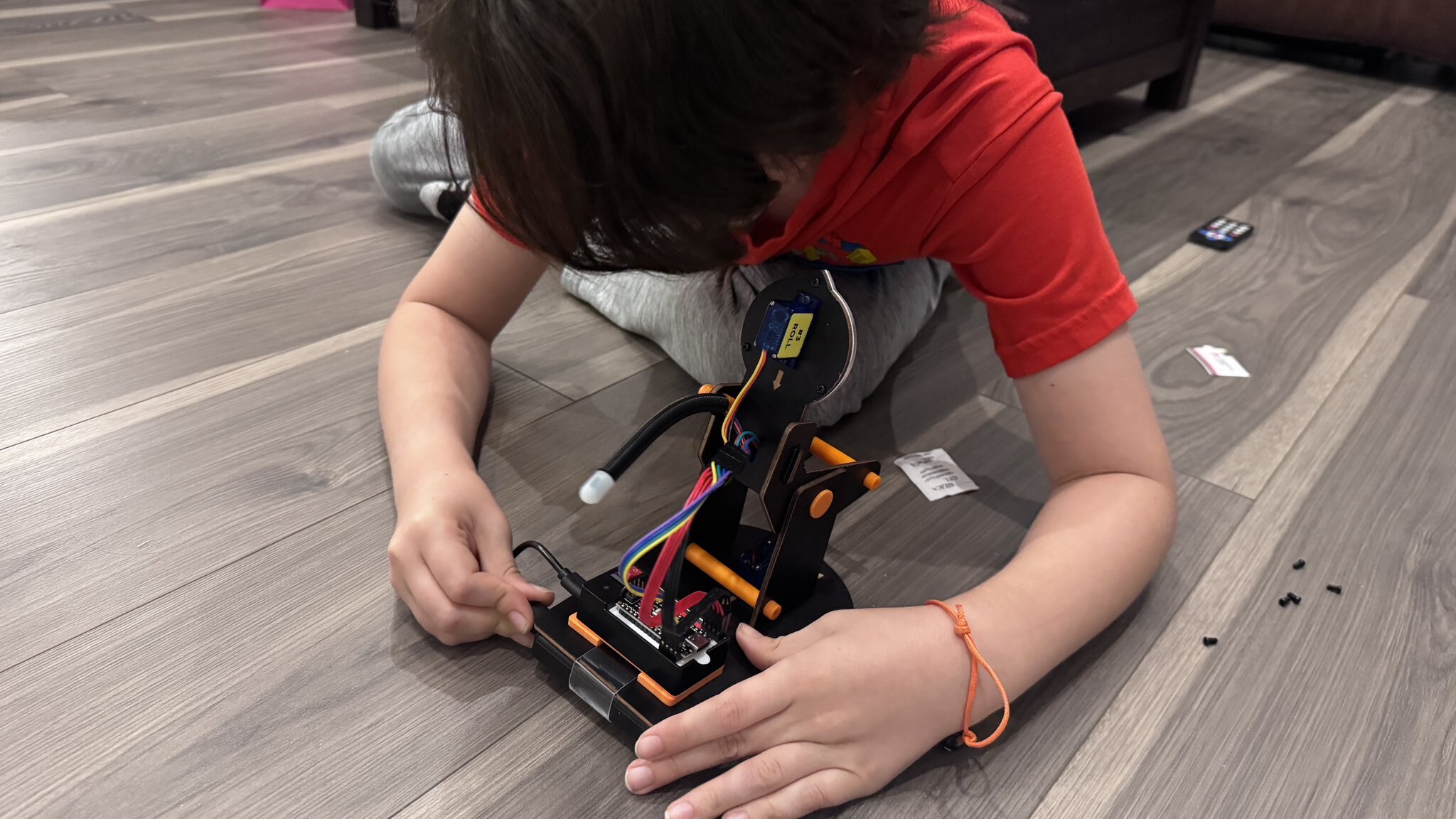
One weekend project captures this well. The family used OpenClaw, a free, open-source robotics kit that lets you control a small mechanical claw arm using code. Think of it like a DIY arcade claw machine you can program from a computer. Their son combined it with a Nerf gun setup, experimenting with how software could control physical movement. Part toy, part science experiment, and entirely a family affair.
“In the Skinner household, AI is less like a gadget and more like a collaborator in everyday life.
This is what an AI household looks like. It is a home where curiosity is amplified, where "let's find out" carries real momentum, and where children are growing up understanding that AI is a tool they can shape. The kids are not being pushed into engineering. They are simply growing up in a house where AI is one more tool for exploring the world, like books, or art supplies, or a trip to the library.
That raises a question worth sitting with. What would it look like if your family worked this way?
A Practical AI Playbook for Moms
You do not need to be an engineer to start using AI in your life. Nani's story might sound advanced, but the principles behind it are surprisingly simple, and they apply whether you work in tech, in healthcare, from home, or anywhere else.
Here are five ways mothers are using AI every day, along with the guardrails that matter.
Managing the Mental Load
This is where most moms start, and where AI makes the biggest difference. You can ask AI to create a weekly meal plan based on your budget and dietary needs. You can have it generate a grocery list sorted by store aisle. You can let it merge everyone's calendars into one family schedule with reminders for picture day, soccer practice, and that dentist appointment you keep meaning to reschedule.
A 2025 survey found that moms use AI most for exactly these tasks: meal planning, scheduling, to-do lists, and writing emails. The benefit goes beyond time saved. It means fewer decisions, less planning stress, and more present moments with your kids.
Tools to try: ChatGPT, Google Gemini, Claude
Faster Work, Less Stress
Whether you are writing reports, preparing presentations, organizing projects, or just trying to get through your inbox, AI can help you move from idea to execution faster. It can summarize research, draft first versions of documents, and help you organize complex thinking.
Nani uses AI to compress weeks of research into days and write plans several times faster. A Udacity survey found that 70% of working moms report improved productivity with AI tools, and 55% report reduced stress. You do not need a technical background to see similar results, just a willingness to treat AI as a brainstorming partner.
A Study Buddy That Never Gets Tired
AI can function like a personalized tutor, explaining homework concepts at your child's level, suggesting age-appropriate science projects, or walking through math problems step by step. Platforms like Khanmigo, Duolingo, and Photomath are built specifically for this.
One example worth noting: a mother whose son struggled with dyslexia built a custom AI tutor by feeding it his educational reports and personal interests. It turned reading exercises into games tailored specifically to him, and his confidence soared.
The important guardrail here is that AI should support learning, not do it for them. As one educator put it, "AI is great for explaining difficult concepts or helping kids get unstuck, but original thinking and work should be theirs." The Skinners get the best results when they learn alongside their kids.
Tools to try: Khanmigo, Scratch, Code.org, Duolingo, Photomath
Bedtime Stories With Their Name in Them
You can create personalized bedtime stories where your child is the hero, incorporating their name, their day, and even specific emotions they felt. You can generate art ideas for school projects, science experiments using things in your kitchen, or learning games tailored to your kid's current obsession.
These creative experiences are becoming some of the most common and most beloved ways parents introduce AI to their children. The value is not in screen time. It is in sparking curiosity and making memories together.
Keeping an Eye on What Matters
AI-powered baby monitors can now track sleep and breathing patterns. Parental control apps use AI to filter inappropriate content and flag potential cyberbullying. Some families use AI chatbots to help children practice mindfulness and understand their feelings.
A word of caution here. AI can feel supportive, but it cannot replace human connection. UNICEF advises parents to be mindful of children developing a preference for AI over real conversations, which could affect the development of empathy and social skills. AI works best as a supplement to your presence, not a stand-in for it.
Guardrails Still Belong to You
Mothers are not adopting AI blindly. A BSM Media survey found that 73% cite security and data privacy as their biggest concern with AI tools. Among moms with kids aged 8 to 12, only 6% believe AI is a clear net positive for children without guardrails in place.
The consensus is clear. AI works when parents stay involved. Set boundaries. Review what your kids are asking AI. The goal is to have a smarter thinking partner in the room while you stay in charge.
Five Prompts Worth Trying Tonight
The key to a good prompt is context. Tell AI about your specific situation, your constraints, your kids' ages, your schedule, your budget. Generic questions get generic answers. These prompts work because they give AI something real to work with.
"I have a family of four, two kids ages 6 and 9, a $150 weekly grocery budget, and one child with a dairy allergy. Create a weekly meal plan that works for all of us."
"My 9-year-old is obsessed with volcanoes and we have baking soda, vinegar, food coloring, and cardboard at home. Give me 5 hands-on STEM activities using what we have."
"My third grader understands halves but gets confused when denominators are different. Explain how to add fractions in a way I can walk through with her tonight."
"I need to reschedule my son's dentist appointment from Tuesday at 3pm to sometime Thursday or Friday afternoon. Draft a short, polite email to the office."
"Plan my week: two kids in soccer Mon/Wed, a dentist visit Tuesday at 10am, a work deadline Friday, grocery shopping needs to happen, and I need one evening free for myself."
Curiosity Is the Only Starting Point
In Nani's house, AI is part of everyday life. She uses it while working through ideas for software, organizing research, or planning the week. Sometimes it comes up during homework or when her kids ask questions about something they want to build.
Her children see AI the same way they see other tools in the house. It is something you ask questions, test ideas with, and learn from. When her son experiments with robotics or toys connected to software, the goal is simple. He gets curious about how things work, and AI helps him think through the next step.
For many moms, the same approach can work at home. AI can help with planning meals, organizing family schedules, or explaining a math concept to a child who is stuck on homework. It can also help turn curiosity into something tangible, like a small project or a creative activity.
Nani's family shows how this can look in practice. AI becomes part of daily routines and conversations. Over time, it simply becomes another way to learn and think through ideas together.
What would it look like if your family started thinking with AI together?